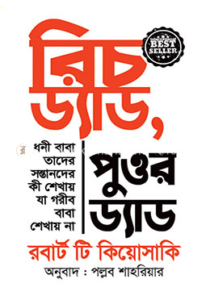
Rich Dad Poor Dad by Robert Kiyosaki contrasts the financial mindset of his own father, highly educated but financially cautious, with that of a friend’s father, an entrepreneur who built wealth through assets and investing. Through that comparison, the book challenges common assumptions about jobs, saving and what actually makes someone wealthy over time.
Key ideas. The book centers on the distinction between assets, things that put money in your pocket, and liabilities, things that take money out, and the observation that many people unknowingly treat liabilities as assets. It also emphasizes financial education as something rarely taught formally, and the idea that mindset toward risk and ownership shapes long-term financial outcomes as much as income does.
Who should read it. Well suited to readers early in their financial journey, including young professionals and students who want a plain-language introduction to thinking about assets, liabilities and long-term wealth-building rather than a technical investing manual.
Our overview. The book’s strength is how it reframes basic financial vocabulary into ideas you can apply immediately, though it’s lighter on hard numbers or step-by-step tactics, and some of its broader claims about traditional employment have drawn debate over the years. As an entry point into thinking differently about money, it remains one of the most widely recommended starting points, and you can see what other readers think in the reviews below. Readers interested in behavioral money habits may also like The Psychology of Money by Morgan Housel.
About this edition. The book details on this page describe the book by its English title and author. The Buy This Book button currently leads to a Bengali translation on Rokomari.
বই পরিচিতি
রবার্ট কিয়োসাকির রিচ ড্যাড পুওর ড্যাড (Rich Dad Poor Dad) বইয়ে দুটি ভিন্ন আর্থিক দৃষ্টিভঙ্গির তুলনা করা হয়েছে। একদিকে লেখকের নিজের বাবা, যিনি উচ্চশিক্ষিত কিন্তু আর্থিক বিষয়ে সতর্ক; অন্যদিকে বন্ধুর বাবা, একজন উদ্যোক্তা, যিনি সম্পদ ও বিনিয়োগের মাধ্যমে বিত্ত গড়েছেন।
বইটি কী নিয়ে?
এই তুলনার মাধ্যমে বইটি চাকরি, সঞ্চয় এবং কীসে মানুষ দীর্ঘমেয়াদে সম্পদশালী হয়, এসব প্রচলিত ধারণাকে প্রশ্ন করে। আলোচনার কেন্দ্রে আছে সম্পদ ও দায়ের পার্থক্য এবং অর্থ, ঝুঁকি ও মালিকানা নিয়ে মানুষের দৃষ্টিভঙ্গি।
মূল বিষয়সমূহ
- সম্পদ ও দায়ের পার্থক্য: যা পকেটে টাকা আনে আর যা পকেট থেকে টাকা নিয়ে যায়
- অনেকে অজান্তে দায়কে সম্পদ মনে করেন, এই পর্যবেক্ষণ
- আর্থিক শিক্ষা, যা সাধারণত আনুষ্ঠানিকভাবে শেখানো হয় না
- ঝুঁকি ও মালিকানা নিয়ে মানসিকতা
- চাকরি, সঞ্চয় ও সম্পদ নিয়ে প্রচলিত ধারণাকে প্রশ্ন করা
এই বই থেকে কী শিখতে পারবেন?
- সম্পদ ও দায় চিনে নেওয়ার সহজ ধারণা
- আয়ের পাশাপাশি অর্থ নিয়ে মানসিকতা কেন গুরুত্বপূর্ণ
- আর্থিক শিক্ষার প্রয়োজনীয়তা নিয়ে নতুন করে ভাবার সুযোগ
- অর্থ ও সম্পদ নিয়ে নিজের ধারণা যাচাই করার দৃষ্টিভঙ্গি
কেন এই বইটি পড়বেন?
বইটি আর্থিক ভাষার মৌলিক শব্দগুলোকে এমনভাবে নতুন করে বোঝায়, যা সঙ্গে সঙ্গে ভাবনায় কাজে লাগানো যায়। তবে এতে সংখ্যা বা ধাপে ধাপে কৌশল তুলনামূলক কম, আর চাকরি নিয়ে লেখকের কিছু বক্তব্য নিয়ে পাঠকদের মধ্যে বিতর্কও আছে। তাই এটিকে বিনিয়োগের হাতেকলমে গাইড হিসেবে নয়, অর্থ নিয়ে ভাবনা শুরু করার একটি বই হিসেবে পড়াই ভালো।
কারা এই বইটি পড়তে পারেন?
- যাঁরা আর্থিক যাত্রার শুরুতে আছেন
- তরুণ পেশাজীবী ও শিক্ষার্থী
- যাঁরা সম্পদ, দায় ও দীর্ঘমেয়াদি সম্পদ গড়ার ধারণা সহজ ভাষায় জানতে চান
- যাঁরা কারিগরি বিনিয়োগ ম্যানুয়ালের বদলে একটি সূচনা-বই খুঁজছেন
মূল শিক্ষা
- সম্পদ হলো যা পকেটে টাকা আনে, আর দায় হলো যা টাকা নিয়ে যায়।
- অনেকে অজান্তেই দায়কে সম্পদ ভেবে নেন।
- আর্থিক শিক্ষা সাধারণত আনুষ্ঠানিকভাবে শেখানো হয় না, তাই নিজে থেকে শেখার গুরুত্ব আছে।
- ঝুঁকি ও মালিকানা নিয়ে মানসিকতা আয়ের মতোই দীর্ঘমেয়াদি ফলাফলকে প্রভাবিত করে।
- চাকরি, সঞ্চয় ও সম্পদ নিয়ে প্রচলিত ধারণাগুলো প্রশ্ন করে দেখা যায়।